
The short answer
If your heater is blowing cold air, cycling on and off, making new noises, or not running at all, it likely needs a repair visit. A technician diagnoses the cause, explains your options, and gives you the price before any work begins.
Winters in the Santa Clara Valley are mild but damp, and nights can get cold enough that a furnace or heat pump that won't start becomes a real problem. Ozone Air Conditioning & Heating repairs gas furnaces, heat pumps, and ductless systems for homeowners in Santa Clara and nearby cities. This page covers the warning signs to watch for, what our technicians check, how we approach repair versus replacement, what drives the cost, and what to expect when we come out.
Signs Your Heating System Needs Repair
Most heating problems start small. Catching them early usually means a simpler fix and less chance of losing heat on a cold night. Call for service if you notice any of the following:
- The system runs but blows cool or lukewarm air
- The heater turns on and off every few minutes (short cycling)
- Some rooms stay cold while others are comfortable
- Banging, squealing, grinding, or rattling sounds that weren't there before
- A burning or dusty smell that lingers beyond the first few minutes of the season
- The furnace won't ignite, or the pilot or igniter keeps failing
- Your energy bills climb without a change in how you use the heat
- The thermostat doesn't seem to control the system
What We Check During a Heating Repair
A good repair starts with finding the actual cause, not just the symptom. Our technicians work through the system in a logical order so nothing gets overlooked.
For gas furnaces, that includes the thermostat and wiring, the igniter and flame sensor, burners, gas pressure, the blower motor and capacitor, limit switches, the draft inducer, the condensate drain on high-efficiency units, and the air filter. We also look at the heat exchanger and venting, because cracks or blockages there can be a safety concern.
For heat pumps, we check refrigerant levels and look for leaks, the reversing valve, the defrost controls, the outdoor coil and fan, electrical connections, and the indoor air handler. In every case, we look at airflow and ductwork, since restricted or leaking ducts are a common reason some rooms stay cold.
Repair or Replace?
Most heating problems can be repaired, and we'll tell you when that's the sensible choice. Replacement is worth considering when the system is older, needs frequent repairs, has a failed major component like a heat exchanger or compressor, or can no longer heat your home evenly.
Local rules matter here too. Under Bay Area Air District rules, gas furnaces manufactured from 2029 must meet a zero-NOx emission standard, which in practice points homeowners toward heat pumps when a furnace is replaced after that date. These rules do not require you to replace equipment that still works; they apply only when a furnace fails or is replaced. If you're weighing a heat pump, note that the federal 25C tax credit is no longer available for new installations after 2025. BayREN and your local clean energy provider may offer incentives, but amounts change by funding cycle, so we confirm the current offer before including it in a quote.
What Affects the Cost of a Heating Repair
Every repair is different, and we give you a clear price before starting work. The main factors are:
- The type of system: gas furnace, heat pump, or ductless
- Which part has failed and whether it's readily available
- The age and brand of your equipment
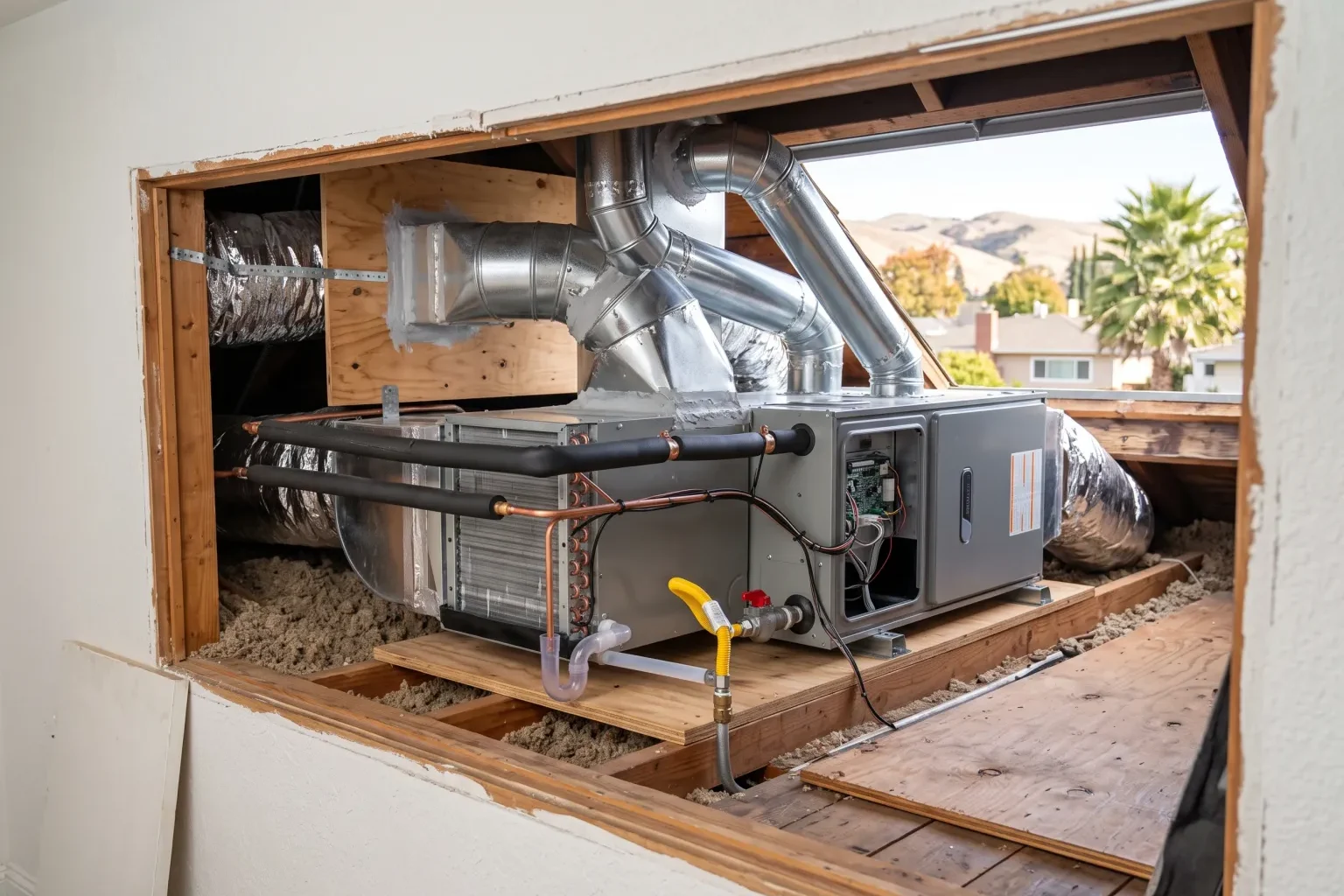
- How easy the unit is to reach, such as in an attic, crawlspace, or closet
- Whether ductwork or venting also needs attention
- Timing, including urgent or after-hours requests
How a Heating Repair Visit Works
When you contact us, we'll ask what you're noticing and schedule a time that works for you. Your technician arrives, listens to what's been happening, and inspects the system. Once we find the cause, we explain it in plain terms, walk through your options, and give you the price. Nothing happens until you approve it.
Many repairs can be completed on the first visit, since our technicians carry common parts. If a specific part needs to be ordered, we'll tell you how long it should take and make sure your system is left in a safe condition in the meantime. Before leaving, we test the system through a full heating cycle and let you know about anything worth watching.