
The short answer
A new AC makes sense when your system is aging, needs a major part, or can't keep your home comfortable. We inspect your home, ducts, and electrical system first, then explain your repair and replacement options and give you a written quote.
If your air conditioner can't keep up on a hot afternoon, or you're adding cooling to a home that never had it, a new system is a big decision. Ozone Air Conditioning & Heating installs central air conditioners, heat pumps, and ductless systems for homeowners in Santa Clara and nearby cities. Below, we explain how to tell when installation makes sense, what we look at before recommending equipment, and what to expect from the first visit through startup.
Signs You May Need a New Air Conditioner
Some problems point to a repair. Others suggest the system is near the end of its useful life. Summers in the Santa Clara Valley are dry, and inland and southern parts of the valley get noticeably hotter than areas near the Bay. An undersized or worn-out unit shows its limits quickly in that heat.
- The system runs constantly on hot days, but the house stays warm
- Some rooms are much hotter than others
- Repairs are becoming frequent, or the same part keeps failing
- The outdoor unit is loud, leaks refrigerant, or has a corroded coil
- Energy bills climb even though you use the system the same way
- Your home has no central cooling and you want it
What We Check Before Recommending a System
We don't size a system by square footage alone. Before we recommend anything, we look at how your home gains and holds heat. We also check whether your existing equipment can support a new unit.
- Sun exposure, windows, insulation, and ceiling height
- Ductwork condition, sizing, and leaks
- Electrical panel capacity and the circuit that serves the outdoor unit
- Your furnace or air handler, and whether it works with a new coil
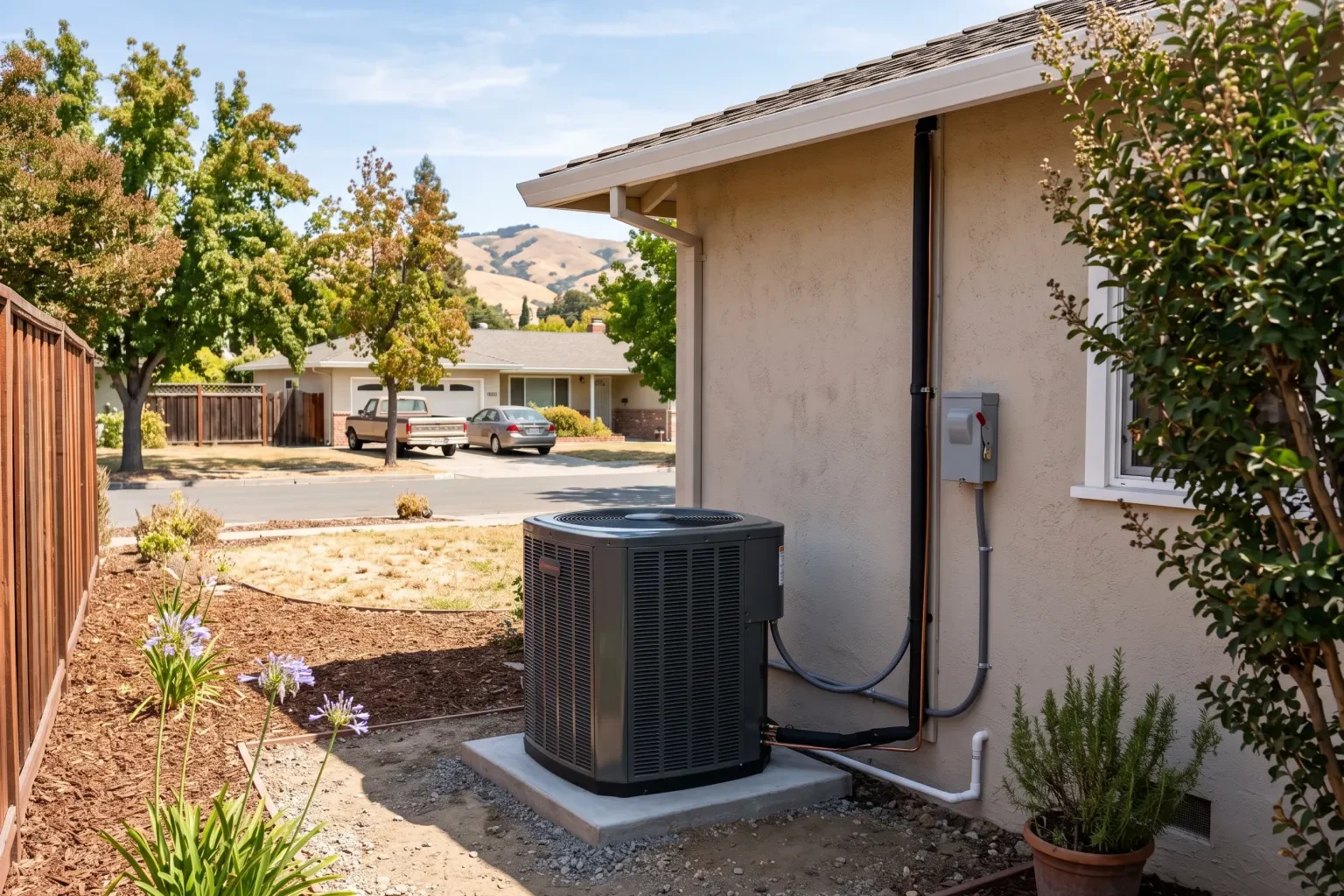
- Where the outdoor unit can go, including noise and clearance
- Whether your thermostat is compatible
Repair or Replace: Your Options
If your current system has a single failed part and is otherwise in good shape, repair is often the sensible choice, and we'll tell you so. Replacement makes more sense in three cases: the unit is aging, it needs a major component like a compressor, or it no longer cools the house well even when it's working.
If you replace, you generally have two paths. You can pair a new central air conditioner with your existing furnace, or you can install a heat pump that handles both cooling and heating. A heat pump is worth considering if your furnace is also getting old. Under Bay Area Air District rules, gas furnaces manufactured from 2029 must meet a zero-NOx standard. In practice, that points homeowners toward heat pumps when they replace a furnace after that date. These rules don't require you to replace working equipment. They apply only when a furnace fails or is replaced. For homes without ducts, ductless mini-splits are another option.
What Affects the Cost of AC Installation
We give you a written quote after the home visit. These are the main factors that raise or lower the price:
The federal tax credit for qualifying heat pumps covered only installations placed in service before December 31, 2025. It isn't available for new installations. Local programs through BayREN and your clean energy provider may offer heat pump incentives. Amounts change with each funding cycle, so we confirm the current offer before including it in a quote.
- The type of system and its efficiency rating
- The equipment size your home needs
- Whether ductwork needs repair, changes, or new installation
- Electrical upgrades, if your panel or wiring can't support the new unit
- Whether the indoor coil or furnace is also being replaced
- How easy it is to reach the attic, crawlspace, or equipment location
- Permit requirements in your city
How an Installation Visit Works
Here's how the process usually goes:
- Assessment: We inspect your home and current system and ask how you use each room.
- Options: We explain the choices that fit your home, including repair if it's reasonable.
- Quote: You get a written quote that spells out the equipment and the work.
- Installation: We remove the old equipment, install the new system, and handle required permits.
- Startup and walkthrough: We test airflow and refrigerant charge. Then we show you how to use the thermostat and change filters.